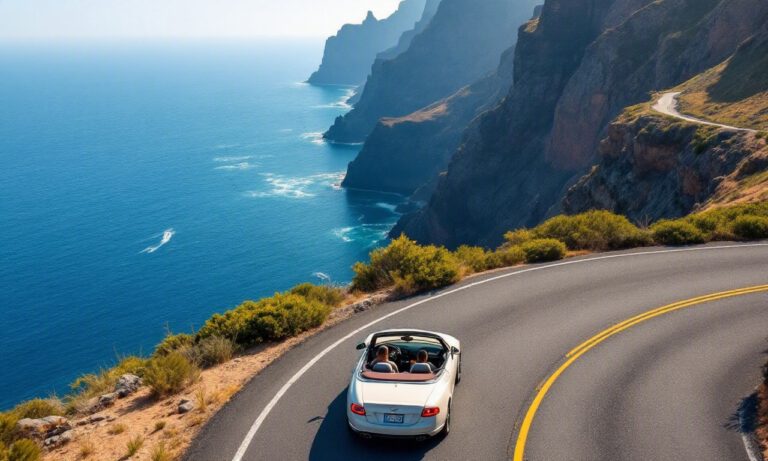
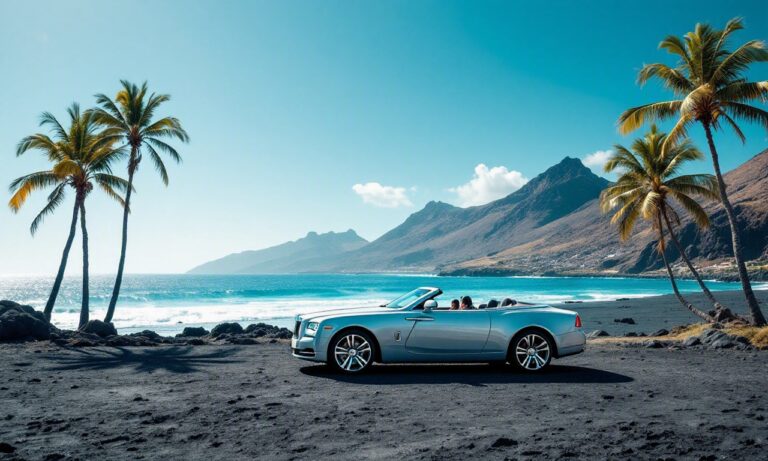
Tenerife is often described as having eternal spring, and for open-top driving that is close to the truth. There is no month when a convertible is the wrong choice. What changes through the year is the character of the day: how strong the sun is, how long the evenings run, how busy the roads get, and which parts of the island are showing their best side. Here is what each season actually feels like from the driver’s seat.
Winter: mild and quiet
Winter is the island’s quiet luxury season. Daytime temperatures on the coast typically sit in the low twenties, which is close to ideal for driving with the roof down: warm in the sun, never oppressive, and comfortable for a full day out. The light is low and golden for much of the afternoon rather than only at the end of it, which flatters every coastal road on the island.
The north is at its greenest, since this is when most of the rain falls, and Anaga in particular looks magnificent. The trade-off is more cloud on the northern slopes and the occasional wet day. The south stays reliably sunny, which is why so many visitors base themselves there in winter and drive north for the scenery. Snow on Teide is normal in these months and occasionally closes the park roads at short notice.
Two seasonal notes. Evenings are properly cool once the sun goes, so a jacket is not optional for an open car after dark. And late winter brings the almond blossom around Santiago del Teide, which turns the hillsides pink and white for a few weeks and makes an ordinary drive memorable. Carnival in Santa Cruz also falls in this period and is worth planning around, in either direction.
Spring: wildflowers and clear air
Spring is arguably the best driving season of the year. The winter rain has done its work, the landscape is still green, and wildflowers appear along the roadsides and across the higher slopes. Temperatures climb into comfortable mid-twenties territory on the coast, and the air is often exceptionally clear, which means the long views from the mountain roads are at their sharpest.
This is also when Teide National Park looks its best to most eyes. The contrast between snow lingering on the peak, the ochre caldera floor and the flowering broom on the slopes is particular to these months. If the park is high on your list, spring is the season to aim for.
The one variable to know about is calima, a hot dust-laden wind from the Sahara that can arrive at any time but is more common in the first half of the year. It raises temperatures sharply, drops visibility to a haze and coats everything in fine dust. It usually passes within a few days. During calima the roof is better up, and the long mountain views are simply not there, so it is a good moment to reschedule the scenic drive rather than push on.
Summer: long evenings
Summer brings the longest days and the most dependable weather. The south is hot and consistently sunny, the north is warmer and clearer than in winter, and the sun sets late enough that a golden-hour drive can follow a full day at the beach rather than replacing it. For evening driving, these are the best months of the year.
The middle of the day is the part to manage. Between roughly noon and four the sun is directly overhead and unrelenting, and many drivers put the roof up simply for shade. The sensible pattern is to drive early, spend the hottest hours somewhere with shade or water, and go out again from late afternoon. Sunscreen matters more than in any other season, and the moving air of an open car makes it easy to underestimate how much sun you are taking.
Summer is also the busiest season, on the roads and in the popular villages. Masca and the Teide road fill quickly, parking at the smaller beaches is gone by late morning, and restaurants need booking. The trade winds are at their strongest in these months too, which keeps the coast pleasant but adds noticeable buffeting on exposed sections.
Autumn: warm water, fewer crowds
Autumn is the quiet favourite. The heat of summer softens, the crowds thin after the school holidays, and the sea is at its warmest of the year, having absorbed months of sunshine. For anyone combining driving with swimming, this is the strongest combination the calendar offers.
Driving conditions are excellent. Temperatures are comfortable through the whole day rather than only at the edges, the light lengthens again into proper golden hours, and the roads are noticeably emptier than in August. Mountain routes that were queued in summer become pleasant again, and the popular viewpoints have space.
Later in the season the first rains return to the north, greening the landscape and bringing occasional heavy showers that pass quickly. It is worth watching the forecast for the northern half of the island and keeping the plan flexible, but this rarely costs more than an afternoon. If you want one recommendation from the whole year, an October or November week with a convertible is very hard to improve on.