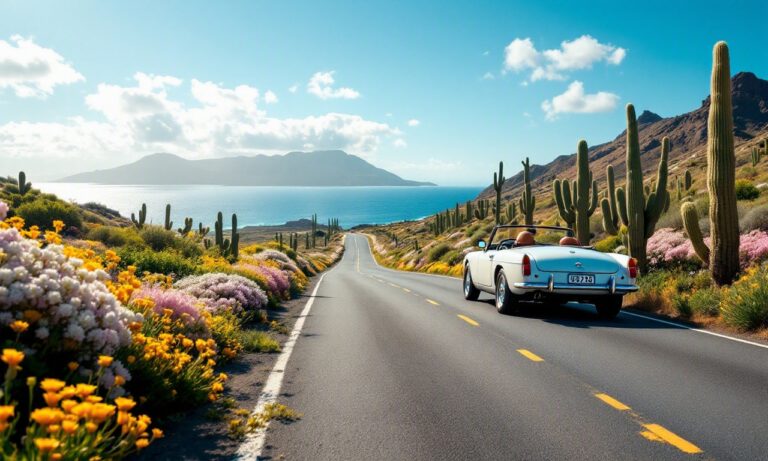
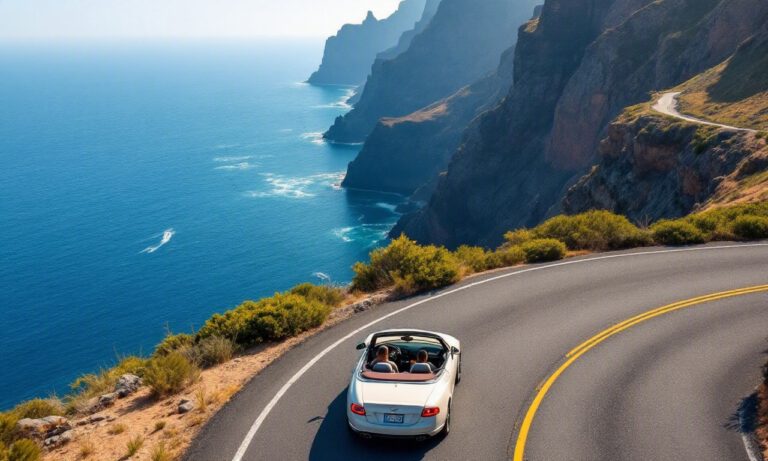
Tenerife’s beaches divide into two families. There are the wide golden bays of the south, several of them built with imported sand, and there are the volcanic beaches: dark grey to jet black, backed by cliffs, shaped by Atlantic swell. The black ones are the island’s own. They photograph beautifully against turquoise water, they are usually quieter, and most of them are best reached by car.
Why the sand is black
The answer is basalt. Tenerife is built from volcanic rock, and as the Atlantic grinds that rock down over long periods it produces sand that carries the colour of its parent material. Where the coastline is young and the cliffs are basaltic, the beach below is dark. In some places the grains are coarse and almost gravelly; in others they are fine and soft, closer in texture to ordinary sand but the colour of wet slate.
The contrast is what makes these beaches memorable. Dark sand makes the water look more intensely blue, the surf whiter, and the greenery above the shore more saturated. In low sun the whole beach takes on a metallic sheen. It is a very different aesthetic from a Mediterranean bay, and it suits the island’s volcanic character far better than pale imported sand does.
One practical consequence deserves emphasis before anything else: dark sand absorbs heat. On a sunny afternoon it becomes genuinely too hot to walk on barefoot, considerably hotter than light sand under identical conditions. Sandals or flip-flops are not a nicety here, they are necessary equipment.
Playa Jardin and the north coast
Playa Jardin in Puerto de la Cruz is the most accessible introduction. It is a long stretch of black sand backed by subtropical gardens laid out as part of a scheme involving the Lanzarote artist Cesar Manrique, and the planting is as much a reason to go as the beach itself. Facilities are good, the town is immediately behind you, and it works well as a stop on a north-coast day rather than a destination in its own right.
For something wilder, Playa del Bollullo sits a short drive east, below the cliffs near La Orotava. The approach involves a narrow lane and then a walking path down, which keeps the numbers manageable. Playa del Socorro at Los Realejos is another north-coast favourite, popular with surfers and with a proper local feel to it. Both are noticeably more exposed than Playa Jardin.
Further east again, the Anaga coast delivers the most dramatic versions. Almaciga and Benijo are black sand beaches beneath steep green ridges, with rock stacks standing offshore and very little development anywhere in sight. They are spectacular, and they are also serious water. The Atlantic here generates strong currents and heavy shorebreak, and these beaches are frequently unsuitable for swimming. Go for the setting, watch the flags, and treat the sea with respect.
Quiet coves in the south
The south-west has calmer water and reliably better weather, and it has black sand too. Playa de la Arena at Puerto de Santiago is the standout: a compact bay of dark sand with clear, generally gentle water, well kept and with the Los Gigantes cliffs a few minutes further up the coast. It is an easy place to spend an afternoon and a natural pairing with a cliff drive.
Nearby Alcala has a small dark beach beside a working harbour and a genuinely pleasant square, which makes it a better lunch stop than most of the larger resorts. These smaller places reward the flexibility a car gives you, because they are awkward to reach by public transport and rarely appear on organised itineraries.
It is worth knowing that many of the best-known southern beaches around Playa de las Americas and Costa Adeje are golden rather than black, and in several cases the sand was brought in. There is nothing wrong with them, but if the volcanic look is what you came for, drive a little further west or north.
Parking, tides and what to bring
Parking is the main constraint. The popular beaches fill by late morning in high season, and the smaller ones often have space for only a handful of cars at the top of a narrow lane. Arrive early or arrive late; the middle of the day is the worst of both worlds. Never block a lane or a turning area, since these are working roads for the people who live there.
Check the flags every time, on every beach, including ones you have visited before. Conditions on the north coast change quickly and a beach that was calm in the morning can be dangerous by afternoon. Where there is no lifeguard, be conservative. Tides also matter more on the smaller coves, some of which shrink considerably at high water.
Pack footwear for hot sand, more water than you plan to drink, and a towel you do not mind turning grey, because fine volcanic sand clings to everything. With an open car, bring a bag for anything loose and remember that the cabin gets extremely hot when parked in direct sun. Leave nothing visible inside, put the roof up while you are away from the car, and enjoy the drive back along the coast in the cooler light of late afternoon.