There is a moment on the TF-12, soon after you climb out of La Laguna and the road tips over the ridge, when the world simply changes. The light goes soft and green. The roadside trees lean in overhead, dripping and bearded with moss, and a thin mist drifts across the tarmac like smoke that forgot to rise. You have just entered Anaga Rural Park, the oldest, wildest corner of Tenerife, and the temperature drops a few degrees as if the island is asking you to slow down. We drive these roads ourselves, on days off and on slow mornings before the airport runs, and they never lose that first shiver.
Most visitors point their rental car at Teide and the southern resorts. Anaga sits at the opposite, north-eastern tip of the island and rewards anyone willing to trade big views for intimate ones: a UNESCO Biosphere Reserve of ancient laurel forest, knife-edge ridges, hidden hamlets and black-sand beaches at the bottom of impossibly green ravines. This guide is the full road trip, from the ridge road to the coast, with honest notes on the fog, the narrow lanes and which car actually makes the day pleasant rather than nerve-racking.
The drive: a forest from another epoch
The star of an Anaga Tenerife drive is the laurisilva, a laurel cloud forest that once blanketed much of southern Europe and North Africa millions of years ago. The ice ages wiped it out almost everywhere; here, on these humid northern slopes, it survived. Driving through it feels genuinely prehistoric. Trade winds from the Atlantic pile up against the Anaga massif and condense into a near-permanent veil of cloud, and the forest drinks that moisture straight from the air. That is why everything is so absurdly green, and why the road is so often wet even when the south of the island is baking.
The spine of the whole park is the TF-12 ridge road. It runs along the very top of the mountains, with the laurel forest on one flank and, on a clear day, glimpses of the ocean falling away on both sides. From it, a web of skinny side roads drops down to the villages and the coast. You do not need to hike to enjoy this place. Half the magic of a laurel forest in Tenerife is simply driving slowly through it with the windows cracked, listening to the drip and the birds.
The route, step by step
A satisfying loop takes roughly four to six hours with stops, and starts most naturally from La Laguna, the old university town just above Santa Cruz. From there you climb onto the ridge and let the TF-12 carry you east.
- Mirador de Jardina early on, looking back over La Laguna and its plain. A gentle warm-up view before the forest closes in.
- Cruz del Carmen, the visitor centre and the green heart of the park. Free parking, toilets, a small cafe, maps, and trailheads right from the car park. This is the place to stretch your legs in the deepest laurel forest.
- Pico del Ingles, a short detour to a railed lookout perched on the cliff edge. On a clear day you see Santa Cruz, the anaga ridges marching to the coast, and sometimes Gran Canaria floating on the horizon. On a foggy day you see beautiful, swirling nothing, which is its own reward.
- The descent to Taganana, where the TF-134 corkscrews down through tunnels and tight bends toward the north coast. Take it slowly and enjoy it.
- The coast at Roque de las Bodegas, Almaciga and Benijo, where the forest gives way to dark volcanic sand and the open Atlantic.
If you have more time, push west along the ridge toward Las Carboneras and Chinamada, or follow the long, lonely road out to Chamorga at the far eastern end, the last village before the wild tip of the island. These are the quietest, narrowest lanes in the park, and the most rewarding for unhurried drivers.
Best time to go
Anaga has its own weather, and it is rarely the postcard blue of the south. The cloud forest is cloudy by definition, especially in the mornings and the afternoons when the trade winds are strongest. That is not a problem; it is the whole point. The forest is at its most atmospheric wrapped in mist, with water dripping from every leaf.
For a balance of views and mood, aim to be on the ridge in the late morning, around eleven, when the cloud often lifts just enough to open the miradores before rolling back in. If you specifically want clear coastal views from Benijo, the light is loveliest in the late afternoon. Spring and early summer bring the greenest forest; winter can be wet and genuinely chilly up top, so bring a layer even if you left a sunny beach an hour earlier. Whatever the season, check the forecast for the north of the island, not the south, and accept that the weather here will do as it pleases.
Which car for these roads
Anaga is not about power; it is about poise. The roads are narrow, twisting, frequently wet and often shared with the occasional bus or local who knows every bend. A compact, sure-footed car is the sweet spot: small enough to thread the tight lanes and pass oncoming traffic without flinching, nimble enough to enjoy the corners, and easy to tuck into the modest parking at the miradores.
If your plans lean toward the very narrowest lanes, out to Chamorga, down to Las Carboneras and Chinamada, a little extra ground clearance brings real peace of mind on rough, single-track sections. Here is the honest breakdown:
- The main loop (ridge plus Taganana plus Benijo): a comfortable economy or compact car is ideal, easy on fuel and easy in the bends.
- The remote hamlets and rough side lanes: a higher-clearance SUV or 4×4 gives you confidence where the tarmac frays.
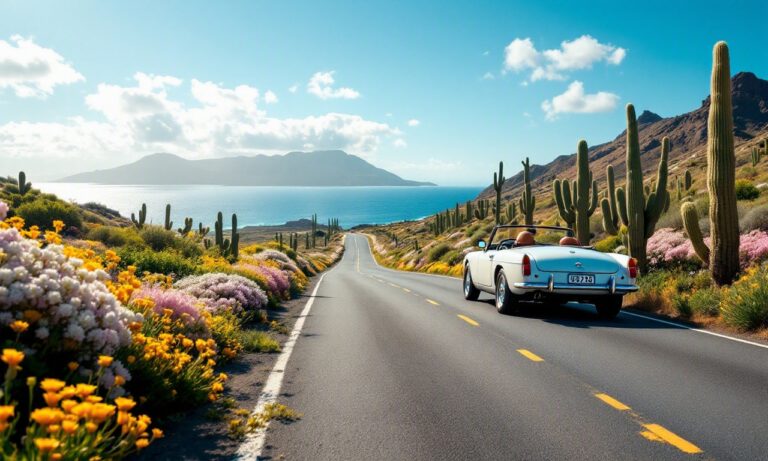
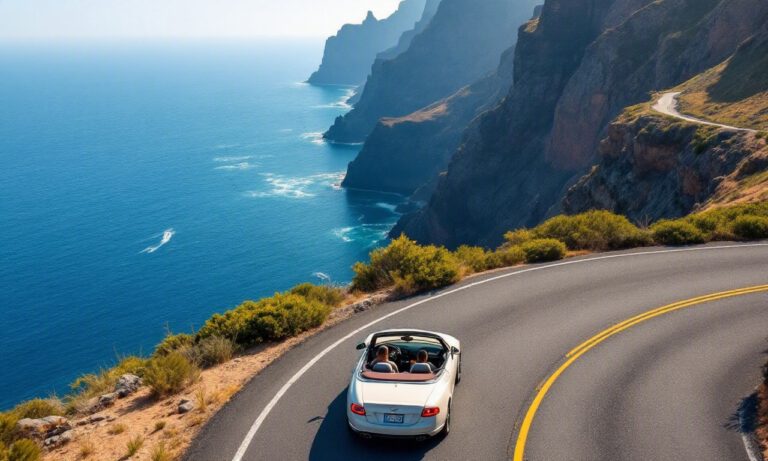
- Pure top-down pleasure on a clear day: a convertible turns the ridge road into something unforgettable, just keep the roof up while you are inside the dripping forest.
Browse the full range and pick what fits your day on our fleet page; if you are torn between a compact and an SUV, a quick WhatsApp message to the team will sort it in a minute.
Where to stop, walk and eat
Short walks from the miradores
You do not need to be a hiker to taste the forest. From the Cruz del Carmen visitor centre, the Sendero de los Sentidos (the Path of the Senses) is a short, well-signed loop, partly accessible, that walks you straight into the heart of the laurisilva in under an hour. It is the single best introduction to the cloud forest if your time is tight. More energetic walkers can take the longer trails down toward Punta del Hidalgo or Chinamada, but those are full half-day commitments with steep returns, so plan transport accordingly.
The villages
Taganana is the classic Anaga village, a tumble of whitewashed houses pinned to the mountainside above the coast, with a pretty church and steep lanes. Las Carboneras and the cave hamlet of Chinamada sit in folds of the western ridge, while Chamorga, at the eastern end, feels like the edge of the world, a tiny cluster of houses, a bar, and footpaths leading out to lighthouses and sea cliffs. None of these are tourist machines; they are working villages, so park considerately and keep the noise down.
Beaches and seafood
Where the road finally meets the sea, the reward is a string of dramatic black-sand beaches. Playa de Benijo is the famous one, a wide sweep of dark sand framed by sea stacks that turn gold at sunset; Almaciga, just beside it, is quieter. The Atlantic here is powerful and the currents are serious, so these are beaches for paddling, photographs and watching the waves rather than swimming far out. Between the beaches and the village of Roque de las Bodegas you will find a handful of simple seafood restaurants serving whatever the boats brought in, with grilled fish, papas arrugadas and mojo, eaten with the surf a few metres away. It is one of the best lunches on the island, and the natural turning point of the loop.
Practical and safety tips
Anaga is safe and hugely enjoyable, but it asks for a different driving mindset than the motorways of the south. A few honest pointers from people who drive it often:
- Drive slowly and use your lights. Fog rolls in without warning. Switch on dipped headlights in the forest so oncoming cars see you on blind bends, not full beam, which just bounces off the mist.
- Expect to reverse. Many side lanes are barely one car wide. The unwritten rule is that whoever is closer to a passing spot, or facing uphill, gives way. A calm, slow approach makes this easy.
- Mind the damp surface. Wet tarmac, fallen leaves and shaded corners reduce grip. Brake before the bend, not in it.
- Fuel and supplies before you climb. There are no petrol stations inside the park and very few shops. Fill up in La Laguna and bring water and snacks.
- Mobile signal is patchy. Download an offline map and screenshot your route before you lose bars on the ridge.
- Start early-ish and do not rush the descent. The roads down to the coast are slow by nature. Give yourself the afternoon and enjoy them.
If Anaga lights the same spark in you that it does in us, the island has more drives in the same spirit. Pair it with a La Laguna and north day route for a fuller north-eastern day, or save the dramatic west for another morning with our Masca gorge drive guide and the high-altitude classic, Teide by cabrio at sunrise.
How to get the car
Here is the part that makes the whole day effortless. With Mandry Cabrio you do not waste a morning queuing at a rental desk. We deliver your car straight to the airport or your hotel, no card is needed to book, and you pay on pickup. Our team drives these Anaga roads ourselves, so if you want a quick honest opinion on whether to take a compact or something with more clearance for the remote lanes, just message us on WhatsApp and we will set you up.
Ready for the cloud forest? Browse the fleet and book your car for the Anaga road trip, delivered to you, no card to book, pay on pickup.